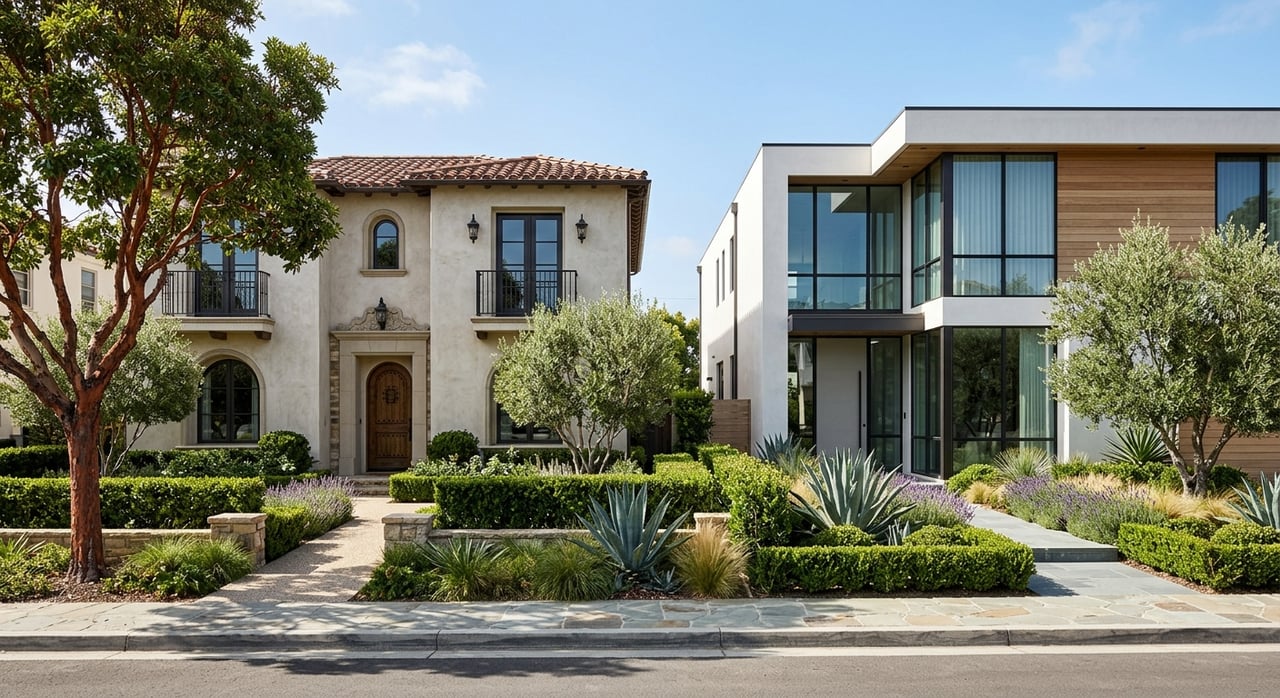
Not all Murrieta homes compete in the same market, and that matters whether you are buying or selling. A citywide median can give you a rough snapshot, but it can also hide major differences between a newer planned community, an established tract neighborhood, a gated luxury pocket, and a semi-rural acreage property. If you want to price smart, write a competitive offer, or understand where your home fits, it helps to look at Murrieta as a collection of micro-markets. Let’s dive in.
Why Murrieta Works as Micro-Markets
Murrieta is a suburban housing market with a strong single-family foundation. According to the city’s housing data and Housing Element, 73.9% of housing units are single-family detached, and among occupied units, 76.6% are detached homes.
That same report shows a 69.5% owner-occupied rate, 21,566 owner-occupied units, 10,851 renter-occupied units, and a 4.2% vacancy rate. It also notes a median owner-occupied value of $639,800, with much of the housing stock built between 2000 and 2009, followed by 1980 to 1999.
Those numbers point to a market where local comps matter. In a city shaped by different construction eras, lot sizes, HOAs, amenities, and housing types, one average price rarely tells the full story.
Murrieta’s Citywide Baseline
As a starting point, Murrieta’s overall housing market in March 2026 was somewhat competitive. Citywide market data shows a median sale price of $640,000, average days on market of about 46, and an average sale-to-list ratio of 99.6%.
That same data shows 43.4% of homes selling above list price. So yes, buyers and sellers are still seeing competition, but that citywide number is best used as a baseline, not a pricing formula.
Inside Murrieta, neighborhood medians range from the low $500,000s to well above $1 million. That spread is exactly why a neighborhood-first strategy is more useful than relying on one citywide headline number.
Newer and Master-Planned Areas
Some parts of Murrieta are newer, more planned, and more product-specific than others. The city describes Murrieta Highlands as a mixed-use, pedestrian-oriented master planned community, which gives you a sense of how this submarket differs from older tract areas or rural pockets.
In March 2026, Murrieta Highlands posted a median sale price of $657,500 with 84 days on market, while Alta Murrieta was at $668,000 and 57 days on market. Murrieta Hot Springs came in higher at $755,000 and 46 days on market.
Zooming out, the broader 92563 ZIP had a median sale price of $685,000, 61 days on market, and a 99.5% sale-to-list ratio, according to 92563 housing data. That shows steady activity, but it also shows how a ZIP code can blend together very different home types and buyer expectations.
What Buyers and Sellers Should Expect Here
In these neighborhoods, buyers often compare floor plans, lot utility, HOA context, and how updated a home feels relative to nearby options. Even homes that look similar on paper can attract different interest levels depending on street location, condition, and community setting.
For sellers, this kind of market usually rewards accurate launch pricing and polished presentation. For buyers, it often helps to move quickly when a well-positioned home hits the market, especially if it aligns closely with what other recent buyers have been targeting.
Established Tracts and Move-Up Neighborhoods
Murrieta also has established suburban neighborhoods where resale patterns can vary block by block. In March 2026, 92562 market data showed a median sale price of $660,000, about 53 days on market, and a 98.7% sale-to-list ratio, with 31.8% of homes selling above list.
Within that same ZIP, Copper Canyon stood higher at $720,000 and 43 days on market. Historic Murrieta was much lower at $507,500 and 28 days on market, though that median came from only three sales, which makes it more sensitive to a small sample size.
This is one of the clearest examples of why citywide numbers can mislead you. Recent 92562 sales include more affordable attached or condo-style options under $550,000 and estate-style sales above $1 million.
Why List Price Precision Matters
If you are selling in an established tract, small pricing mistakes can have a big impact. A home can be overpriced for its immediate pocket even if it seems reasonable compared with a broader Murrieta average.
That is where neighborhood-level pricing discipline matters most. Looking closely at recent nearby sales, lot size, updates, HOA context, and the home’s exact position in the tract can help narrow in on a price that fits the real buyer pool.
Gated, Higher-End, and Amenity-Driven Pockets
Murrieta also has niche neighborhoods that play by their own rules. In March 2026, Greer Ranch market data showed a median sale price of $747,500 with 54 days on market.
Bear Creek was the standout luxury outlier at $1.46 million median sale price, 122 days on market, and roughly 2.3% below list, based on only nine sales. The Colony represented another distinct submarket, with a median sale price of $525,000 and around 100 days on market, with current listings describing it as a 55-plus gated community.
These neighborhoods often respond less to the citywide average and more to scarcity, amenities, HOA structure, age restrictions where applicable, and the number of truly comparable recent sales. In other words, a luxury or niche market often needs a more tailored pricing and negotiation strategy.
How Strategy Changes in Niche Markets
For buyers, slower-moving niche markets can create room for more patient decision-making. That does not always mean lower pricing, but it can mean more opportunity to evaluate terms, condition, and how the property compares with limited direct comps.
For sellers, this is where preparation and positioning matter. When the buyer pool is narrower, clear pricing logic and strong presentation can help a listing stand out without leaning too hard on citywide momentum.
Semi-Rural and Acreage Areas
Some Murrieta properties sit in a very different setting from tract neighborhoods and planned communities. City planning materials describe rural homes on roughly 4 to 5 acres in some areas and larger ranch homes on 2 to 5 acres west of Murrieta Creek and toward the foothills, while also identifying private communities like Bear Creek and the Rancho California and Murrieta Hot Springs area, including Warm Spring Knolls, Spring Knolls, and Golf Knolls, as distinct parts of the local housing mix.
These properties are influenced by more than square footage and interior finishes. Lot size, privacy, views, access, topography, and usable land can all shape value in ways that standard tract-home comps cannot fully capture.
Murrieta’s setting also matters here. The city notes 53 parks and more than 20 miles of trails, and nearby open space includes the approximately 7,500-acre Santa Rosa Plateau Ecological Reserve area referenced in city planning materials. For some buyers, that lifestyle context becomes part of the value equation.
Fire Zone Rules Matter Here Too
If you are looking at foothill or acreage areas, wildfire-related disclosures and property conditions deserve extra attention. The city’s 2025 fire hazard update notes that updated Very High and High Fire Hazard Severity Zone maps took effect on July 4, 2025, and homes sold in those zones require AB 38 defensible-space inspections.
That does not make these areas less desirable. It simply means buyers and sellers should understand the inspection and property-readiness side of the transaction before going active or writing an offer.
A Simple Way to Think About Murrieta’s Market Types
A practical reading of current neighborhood medians looks something like this:
- Low-$500,000s: Historic Murrieta and The Colony
- Mid-$600,000s to upper-$700,000s: many family-home neighborhoods, newer corridors, and amenity-driven tracts
- $1 million and up: Bear Creek and some acreage or estate-style properties
This is not an official city classification. It is simply a helpful way to understand how Murrieta’s submarkets are behaving based on current median pricing.
What This Means for Sellers
If you are selling, your biggest risk is using the wrong comparison set. A citywide median may be useful for context, but it does not replace a close look at your immediate neighborhood, property type, lot profile, and buyer appeal.
Murrieta overall averaged 99.6% of list price in March 2026, while 92562 averaged 98.7% and 92563 averaged 99.5%, based on citywide market data. That gap may sound small, but it can translate into meaningful pricing differences depending on where your home sits.
In faster-moving family-home pockets, clean prep, strong early marketing, and disciplined launch pricing can help you capture serious interest quickly. In higher-end or niche areas, a more tailored approach may matter more than speed alone.
What This Means for Buyers
If you are buying, understanding Murrieta by micro-market can help you avoid two common mistakes. The first is overreacting to a citywide median that does not match your target neighborhood. The second is assuming all Murrieta listings should move at the same pace.
Some neighborhoods may justify a fast, well-supported offer. Others may allow more time for due diligence, property review, and negotiation around terms.
The key is knowing what kind of market you are stepping into before you make a move. That is especially helpful when comparing planned communities, established tracts, gated neighborhoods, and acreage properties that attract different buyers for different reasons.
If you want help understanding where your home or target neighborhood fits in Murrieta’s market, Jordona Your Realtor can help you break down the numbers, compare the right comps, and build a strategy that fits your goals.
FAQs
What does it mean that Murrieta has different neighborhood market types?
- It means Murrieta works more like a collection of smaller housing markets, where pricing, demand, and days on market can vary a lot by neighborhood, property type, and setting.
Why is a citywide Murrieta median home price not enough?
- A citywide median is a useful baseline, but it can hide big differences between planned communities, established tract neighborhoods, gated pockets, and acreage properties.
Which Murrieta neighborhoods tend to be higher priced?
- Based on the research provided, Bear Creek stands out as the highest-priced niche market, while other gated or amenity-driven neighborhoods such as Greer Ranch can also price above many city averages.
Are newer Murrieta neighborhoods priced the same as older ones?
- No. Newer and master-planned areas like Murrieta Highlands can perform differently from older tracts or Historic Murrieta because buyer preferences, home styles, amenities, and available comps are different.
What should Murrieta buyers look for in semi-rural areas?
- In Murrieta’s semi-rural and acreage pockets, buyers should pay close attention to lot size, privacy, views, usable land, and whether wildfire-related inspection requirements such as AB 38 apply.
How should Murrieta sellers price a home in a micro-market?
- Sellers should start with neighborhood-specific comps and then adjust for lot size, condition, HOA and amenity profile, and whether the property is in a tract, gated, or acreage setting.