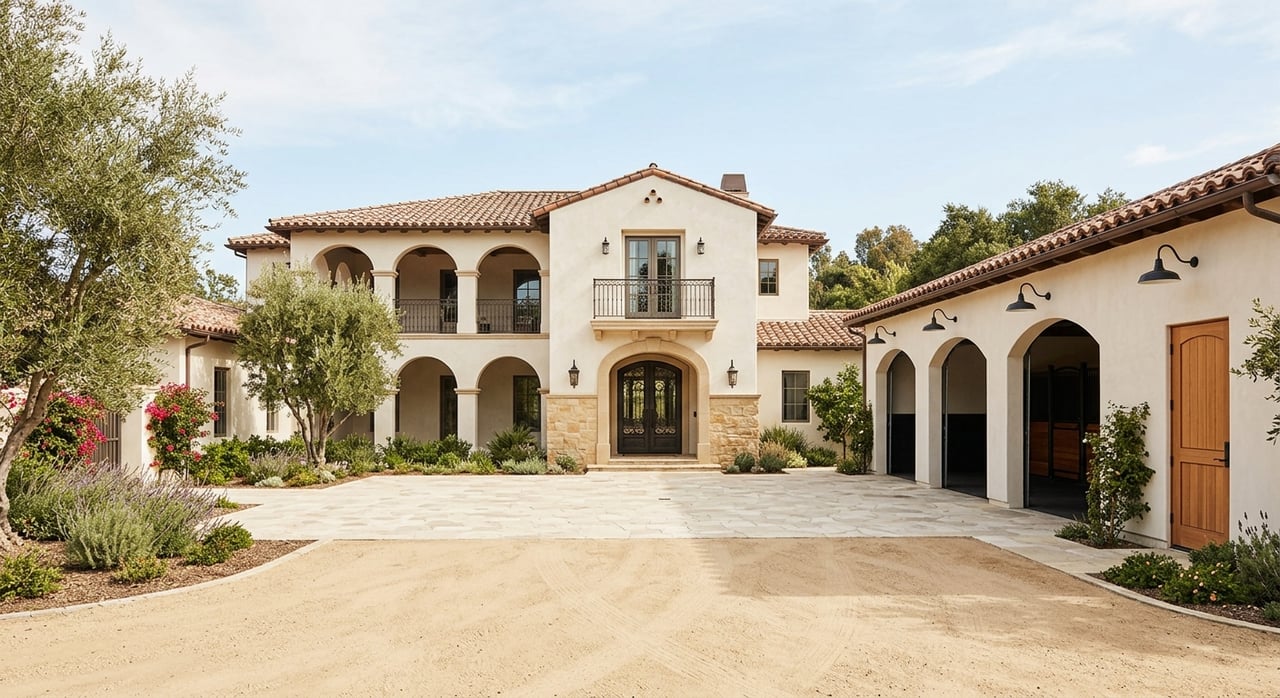
If you are picturing La Cresta as just a bigger house with a nicer view, the reality is a little different. Estate living here is less about square footage alone and more about land, privacy, daily upkeep, and a semi-rural lifestyle that works on its own terms. If you are thinking about buying or selling in La Cresta, it helps to understand what ownership really looks like before you make a move. Let’s dive in.
La Cresta is built around land
La Cresta is an unincorporated community in Riverside County’s Third District, and that matters more than many buyers first realize. The local property owners association describes it as a private, low-density community with acreage homes and land-based uses.
That layout shapes the entire experience. The community covers about 5,878 acres, includes 887 five-acre-minimum parcels, and has roughly 26 miles of roads. In practical terms, that means homes are spread out, neighbors are not right on top of each other, and the setting feels more rural than a typical suburban neighborhood.
Privacy comes with more responsibility
One of the biggest draws in La Cresta is privacy. Larger parcels give you more breathing room, more separation, and more flexibility for uses that are harder to find in standard subdivisions.
At the same time, estate living here is more hands-on. La Cresta’s CC&Rs say owners automatically join the association, which helps maintain and repair private roads, drainage systems, slope easements, temporary water facilities, and areas set aside for fire protection.
That is an important difference from many city neighborhoods. In La Cresta, ownership is tied more directly to shared private infrastructure, so you are not just buying a home. You are also stepping into a property and community setup that requires ongoing attention.
Exterior changes are more governed
If you love the idea of customizing a property, La Cresta can offer room to create, but it is not a free-for-all. The community’s governing documents require architectural committee approval for building plans and visible exterior changes.
That can affect remodels, additions, and other updates that change how the property looks from the outside. For buyers, this is worth understanding early. For sellers, it is a reminder that permitted improvements and well-managed property changes can matter when it is time to market your home.
Daily life feels more semi-rural than suburban
La Cresta sits in the Temecula Valley orbit, but it does not function like a walkable master-planned neighborhood. You are close to regional amenities, yet your day-to-day setup is more dependent on driving, planning, and managing your own property.
That trade-off is part of the appeal for many homeowners. You get more land, more privacy, and more room for lifestyle uses, but you also take on more self-management and more distance from everyday errands.
Landscaping and water use need planning
Rancho California Water District serves La Cresta and the surrounding southwest Riverside County foothill area. Its published materials describe steep terrain, pressure zones, and pumped delivery to higher elevations.
That is not just technical background. It helps explain why outdoor water use, irrigation planning, and landscape choices can be bigger parts of ownership here than they are in tract housing.
The district also encourages drought-friendly California-native plants because outdoor watering makes up a major share of household use. If you own in La Cresta, landscaping is not only about appearance. It is also about practical maintenance, water use, and how your property functions over time.
Driveways, brush, and land care are part of the lifestyle
On a larger parcel, maintenance tends to extend beyond the home itself. Depending on the property, that may include driveway care, brush management, slope awareness, and regular landscape upkeep.
For some homeowners, that is exactly the point. They want space and are happy to manage it. For others, it is an adjustment from lower-maintenance suburban living.
If you are buying in La Cresta, it helps to look past finishes and floor plans. You also want to think about how much land you want to maintain and how involved you want your weekly or seasonal upkeep to be.
The equestrian and outdoor side is real
In many communities, outdoor lifestyle language can feel like marketing copy. In La Cresta, it is backed by the surrounding landscape and regional context.
The nearby Santa Rosa Plateau Ecological Reserve spans 9,000 acres and protects oak woodlands, wetlands, chaparral, bunchgrass prairie, and vernal pools. The reserve also reports more than 200 native bird species and 49 rare, threatened, or endangered animal and plant species.
That setting supports a lifestyle tied to open space and recreation. The reserve offers trail walks, and horseback riding and mountain biking are popular in the Sylvan Meadows Multi-Use Area.
The area also reflects a long ranching history. The Moreno and Machado Adobes, which date to 1846, once served as bunkhouses for cowboys. That history helps explain why the equestrian identity here feels rooted in the land rather than added as a theme.
You are close to Temecula Valley amenities
Living in La Cresta does not mean giving up access to shopping, dining, or regional recreation. Temecula Valley tourism materials highlight wine, Old Town, shopping, dining, hiking, bike trails, equestrian activities, and other outdoor experiences across the broader area.
The region is also positioned within reach of several Southern California destinations. Temecula Valley is noted as being about one hour from San Diego, Orange County, and Palm Desert, and about an hour and a half from Los Angeles.
For many buyers, that combination is the sweet spot. You can enjoy a more private, land-oriented home environment while still staying connected to the broader Temecula Valley lifestyle.
Wildfire readiness is part of ownership
One of the clearest realities of estate living in La Cresta is that wildfire preparedness is not seasonal window dressing. Riverside County says wildfire readiness is a year-round effort and directs residents to evacuation planning, emergency alerts, and power-outage readiness.
CAL FIRE also promotes defensible-space practices, and Rancho Water says it is working with Cal Fire to install helicopter dip tanks in the De Luz, La Cresta, and Santa Rosa communities region. That tells you something important about the area.
Fire preparedness is part of normal ownership here. If you live in La Cresta, you should expect brush management, emergency planning, and seasonal readiness to be built into how you care for your property.
What buyers should really expect
If you are considering a move to La Cresta, it helps to go in with the right mindset. This is not suburban convenience in a larger wrapper. It is semi-rural estate living with a different rhythm and a different set of responsibilities.
You may love La Cresta if you want:
- More land and more privacy
- Space for horses or other lifestyle uses
- A setting shaped by open space rather than tract streets
- Close access to Temecula Valley amenities without living in the middle of them
You may need to think harder if you want:
- Low-maintenance ownership
- Walkable daily conveniences
- A more standardized neighborhood setup
- Less seasonal property management
What sellers should understand about marketing La Cresta
Selling in La Cresta usually requires more than posting square footage and bedroom count. Buyers often need help understanding the lifestyle, the land, and the trade-offs that come with the property.
That means strong marketing should present the full picture clearly. Privacy, parcel size, access, outdoor potential, and property upkeep all shape buyer interest here.
For acreage and estate properties especially, polished presentation and accurate positioning matter. The right strategy helps buyers see not just the home, but how the property fits the La Cresta lifestyle.
Estate living here is a lifestyle choice
What estate living in La Cresta really looks like is simple to describe once you strip away the buzzwords. It means larger parcels, more privacy, private-road governance, outdoor and equestrian potential, and a closer connection to land care and wildfire readiness.
For the right buyer, that can be a great fit. For the right seller, understanding how to frame that lifestyle can make a real difference in how a property is received in the market.
If you are thinking about buying or selling in La Cresta, working with a team that understands both the lifestyle and the local market can help you make smarter decisions with less stress. For tailored guidance and white-glove support, connect with Jordona Your Realtor.
FAQs
What is La Cresta in Riverside County like?
- La Cresta is an unincorporated, low-density community in Riverside County with acreage homes, five-acre-minimum parcels, private roads, and a more rural feel than a typical suburban neighborhood.
What does estate living in La Cresta mean for homeowners?
- Estate living in La Cresta usually means more land, more privacy, and more flexibility for outdoor or equestrian uses, along with more responsibility for upkeep, landscape care, and wildfire readiness.
What should buyers know about La Cresta property maintenance?
- Buyers should know that ownership can include managing larger outdoor areas, driveway and brush upkeep, irrigation planning, and awareness of private-road and drainage systems maintained through the association.
Are there rules for exterior changes on La Cresta properties?
- Yes. La Cresta’s governing documents require architectural committee approval for building plans and visible exterior changes, which can affect remodels, additions, and other updates.
Is La Cresta close to Temecula Valley amenities?
- Yes. La Cresta is part of the broader Temecula Valley orbit, so you can access regional shopping, dining, outdoor recreation, and wine-country attractions while still living in a more private setting.
Why is wildfire planning important in La Cresta?
- Wildfire planning is important because Riverside County identifies preparedness as a year-round need in the area, with a focus on evacuation planning, emergency alerts, power-outage readiness, and defensible-space practices.