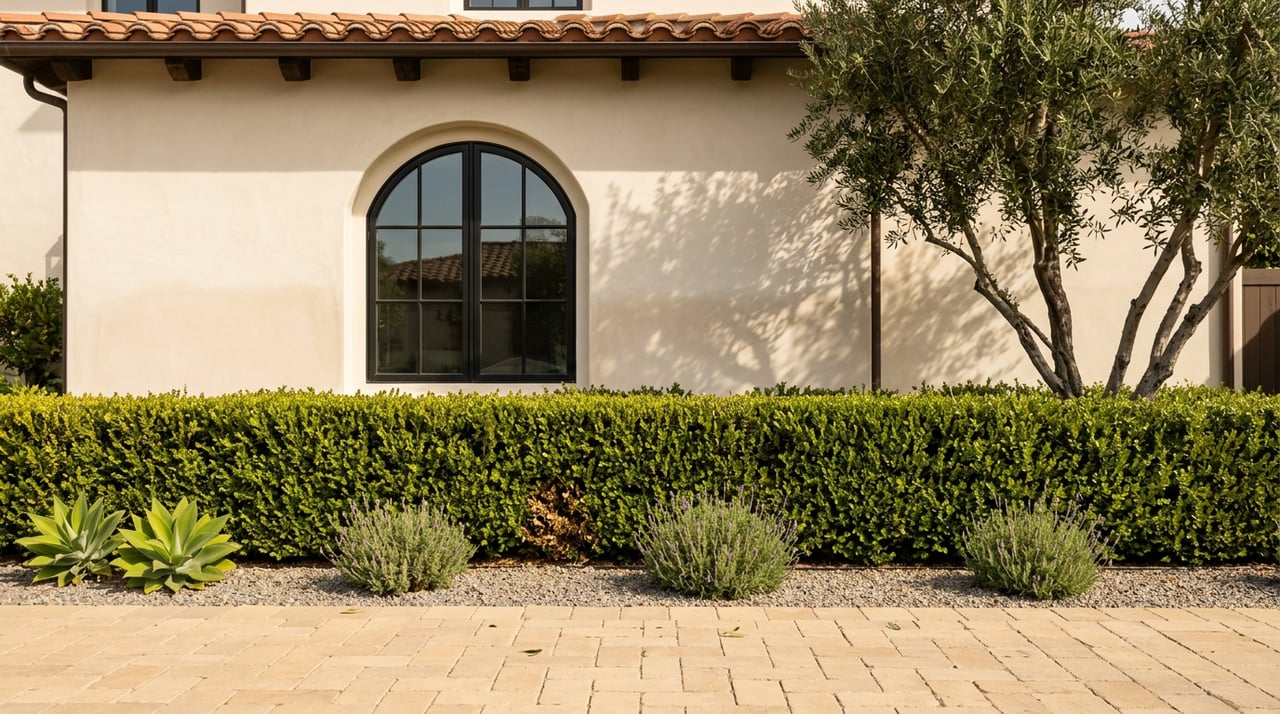
Two Temecula listings hit the market last week. Both asked in the mid-$700s. Both had four bedrooms, a three-car garage, and the same TVUSD attendance boundary. On paper, they were interchangeable. In practice, the monthly cost of owning one was almost $500 higher than the other, and the buyer who wrote the offer on the pricier home qualified for a loan the other buyer could not.
The gap had nothing to do with the sale price. It had everything to do with what the portals do not show.
The number the portals don't show
Temecula's median sale price sits at $775,000, homes are moving in 48 days, there is a moderate 1.16-month supply of inventory, and properties are selling for 99.15% of the asking price. Those are the citywide numbers a buyer sees before the first showing. They describe a balanced market. They do not describe a home.
The base property tax rate in Temecula, before any special assessments, is 1.04785%. That is the number most buyers plug into their affordability calculator. It is also the number that will be wrong on the vast majority of homes they tour. Temecula is new: virtually every post-1990 subdivision sits in at least one Community Facilities District, and ranges matter more than averages, with roughly $1,000 a year in Paloma del Sol and $3,700 a year in Sommers Bend both counting as "Temecula Mello-Roos."
Layer that CFD line item on top of the base rate and the picture changes fast. Add the CFD assessment to the base property tax and the effective rate can jump from 1.1% to 1.9% or higher, which on a $775,000 Temecula home is the difference between roughly $8,500 and $14,700 a year. That $6,200 spread is the reason the portal median is a fiction. The sticker price is the same. The homes are not.
Same price tag, different homes
Here is what the citywide median hides once you drop below the city line and into the master-planned communities where most 2026 buyers are actually shopping.
| Community | Recent median | Typical HOA | Mello-Roos (annual) | Character |
|---|---|---|---|---|
| Paloma del Sol | $734,450 | ~$125/mo | Under $1,000 | Established 1990s tract, five community pools |
| Redhawk | $812,000 (Mar 2026) | $150–$200/mo | Moderate, older CFD | Golf course community, mature landscaping |
| Crowne Hill | $892,000 | $150–$200/mo | Moderate | Backs to Wine Country, mature streets |
| Wolf Creek | $550,000–$750,000 range | Moderate | Higher, newer CFD | Contemporary architecture, resort pool |
| Sommers Bend | Premium new construction | Newer amenity load | Up to ~$3,700/yr | Newest tracts, top of the CFD scale |
Read the table the way a lender reads it, not the way a portal presents it. A Paloma del Sol home at $734K and a Wolf Creek home at $734K look identical in a search filter. Once the CFD line drops in, the Paloma del Sol home carries under $85 a month in special assessments while the Wolf Creek home can carry two to three times that. Over a 30-year hold, that spread is a mid-sized car.
The Redhawk resale at $812K is where the math gets genuinely counterintuitive. It costs $78,000 more at closing than the Paloma del Sol comp. It sits on an older CFD with a lower assessment. The all-in monthly, once base tax, CFD, and HOA are added to principal and interest, can land within $150 of the "cheaper" newer-tract home. The buyer who assumed a $78K price gap meant a $78K lifestyle gap was reading the wrong number.
How the CFD shrinks your pre-approval
The CFD does not just move the monthly payment. It moves the loan you qualify for.
Mello-Roos affects your loan, not just your monthly payment: lenders include it in DTI, and that can shrink your maximum loan amount by tens of thousands. A buyer pre-approved for $775K based on Temecula's base rate walks into a Sommers Bend model home and discovers, on the second pass with the lender, that the qualifying number is closer to $720K once the CFD is fully counted. Same income. Same credit. Different address.
The market layer on top of this is not forgiving. The 100.1% sale-to-list ratio means that, on average, homes in Temecula are selling at or just above asking price, and well-priced homes in desirable neighborhoods frequently receive multiple offers within the first two weeks on market. A buyer who has to re-open the search after a DTI reset is looking at a different price band in a market where good listings are gone in two weeks. That is the friction. It shows up at underwriting, not at showings.
The verification your agent should run before you write an offer
Every one of these numbers is public. The problem is that no portal aggregates them at the parcel level, so the CFD picture only assembles itself when someone actually does the work.
- Pull the specific APN off the listing and query the Riverside County tax bill directly. Neighborhood averages are useful for shortlisting. They are not useful for underwriting.
- Identify every CFD on the parcel. The Mello-Roos Community Facilities Act of 1982 authorizes the formation of community facilities districts to finance school facilities, and TVUSD's online resource displays CFDs issued under its authority, with other CFDs listed on the tax bill. Most Temecula homes sit inside two or three.
- Request the Resale Mello-Roos Assessment for each CFD. Ask the listing agent for the RMA for each CFD; it shows the annual escalator and the bond maturity year.
- Add the CFD total to the base rate and recompute the effective rate for this specific parcel. Send that number to the lender before you finalize the pre-approval letter.
- Confirm the bond horizon. Most Temecula Mello-Roos bonds were issued for 20 to 40 years, meaning current assessments typically expire between 2035 and 2060 depending on when the CFD was formed. A five-year hold and a thirty-year hold weigh the CFD very differently.
For new construction the requirement is stricter. The builder is legally required to provide a Mello-Roos disclosure before the purchase contract, so underline the total annual amount, the escalator cap, and the maturity date before you sign. The escalator cap is the line most buyers skim past. It is the line that determines whether the $3,200/year assessment quoted at closing is still $3,200 a decade later or closer to $4,100.
What the thesis costs you if you ignore it
Two buyers, same $775K budget, same TVUSD zone. One writes on the Paloma del Sol resale with a sub-$1,000 CFD and a $125 HOA. The other writes on the Sommers Bend new build with a $3,700 CFD and a newer amenity dues structure. At year one, the sticker prices match. At year ten, factoring the CFD escalator and the HOA growth, the second buyer has paid tens of thousands more to own a home the portal ranked identically to the first.
That is the market claim worth carrying into a Temecula search. The median is a headline. The parcel is the number.
FAQ
Are older Temecula homes always the cheaper carry?
Usually, but not universally. Older homes built before 1990 or in Wine Country often pay nothing in Mello-Roos. That advantage can be offset by higher renovation costs, older systems, and, in some cases, higher HOA dues on communities that have taken on newer amenity projects. Run the effective-rate math on the specific parcel before assuming.
When do Temecula CFDs actually expire?
Most were issued for 20 to 40 years, so current assessments typically expire between 2035 and 2060. The RMA on each CFD lists the specific maturity year. That date matters more for long-hold buyers than short-hold ones.
If rates drop, does any of this change?
Not the CFD math. Most forecasts suggest mortgage rates will hover in the 6% to 6.5% range through 2026, and while rates are higher than pandemic-era lows, they have stabilized enough that buyers are adapting. A rate move affects the P&I portion of the payment. The CFD is a fixed line item, indexed to its own escalator, unaffected by what the Fed does next.
Does Prop 13 protect me from CFD increases?
No. Mello-Roos is independent from property tax, is not affected by the value of the home, can rise or fall, and is not subject to Proposition 13. That is why the escalator cap on the original CFD documents is the line to underline.
If you are shopping a Temecula neighborhood right now and want the effective-rate math run on a specific address before you write, the team at Jordona Hertz will pull the parcel, price the CFD into the monthly, and tell you honestly whether the "cheaper" listing is actually cheaper. Get your free home valuation and start the conversation with the number that matters, not the one the portal shows.